Managing Avalanche Terrain (MAT)
If you’ve taken your AST 1 or AST 2, you already understand the fundamentals of avalanche safety, how avalanches form, how to read a bulletin, how to use your rescue gear, and how to make good decisions with your group.
But there’s one skill that defines real backcountry confidence more than any other:
The ability to choose terrain well.
That’s where the Managing Avalanche Terrain (MAT) course comes in, and it might just be the most useful, practical, and underrated course in the avalanche education pathway.
So, What Is MAT?
MAT (Managing Avalanche Terrain) is a one-day, field-based course focused entirely on terrain recognition and route selection.
Unlike AST 1 and AST 2, which blend theory, snowpack knowledge, and rescue, MAT is 100% about applying what you already know to make better decisions in real terrain.
MAT is about:
Seeing terrain the way a guide sees it
Identifying safe vs. consequential terrain features
Choosing routes that minimize exposure
Adapting your plan as conditions change
Using real-world decision frameworks while moving through the mountains
If AST 1 and AST 2 are the “why,”
MAT is the “how.”
Who MAT Is For
This course is perfect for you if:
You’ve taken AST 1 and are now riding with friends in the backcountry
You’ve taken AST 2, but want more real-world practice applying terrain choices
You're feeling confident in the basics, but want more certainty in your decisions
You want to start leading, not just following
MAT is also highly recommended for:
Splitboarders and skiers who frequent Mt. Cain, Mount Washington, or Strathcona
Riders planning trips in unfamiliar terrain
Anyone who wants their backcountry days to feel smoother, safer, and more intentional
Why MAT Matters
(The Skill That Changes Everything)
Good terrain choice prevents avalanches better than any piece of gear or snowpit test.
A few examples MAT helps you master:
When it’s safe to travel on a slope vs. when it’s not
How to choose aspects and angles that reduce risk
How to maintain safe group spacing
How to identify terrain traps quickly
How to build a backup plan you can actually execute
These are the decisions that make days safe, smooth, and fun.
Why MAT Is Especially Valuable on Vancouver Island
Our maritime snowpack can change fast.
Storm cycles, warm-ups, and rapid snowfall events are common.
This means:
The avalanche hazard can shift within a single touring day
Terrain decisions need to be responsive, not static
Recognizing clues as you move is essential
MAT focuses on:
Visual terrain cues
Real-time observation
Adapting your line choices to changing conditions
This is exactly the skillset needed for Island touring.
What the MAT Day Looks Like
MAT is fully field-based — no classroom session.
A typical day includes:
Trip planning together via zoom prior to the course then again at the trailhead
Moving through terrain as a group
Frequent terrain discussion stops
Choosing safe uptracks and descent lines
Practicing group spacing, regroup locations, and exposure management
Reflecting on decisions as conditions shift through the day
You’ll get constant coaching, but you make the calls.
This is guided decision-making, not just instruction.
The VIBE Difference
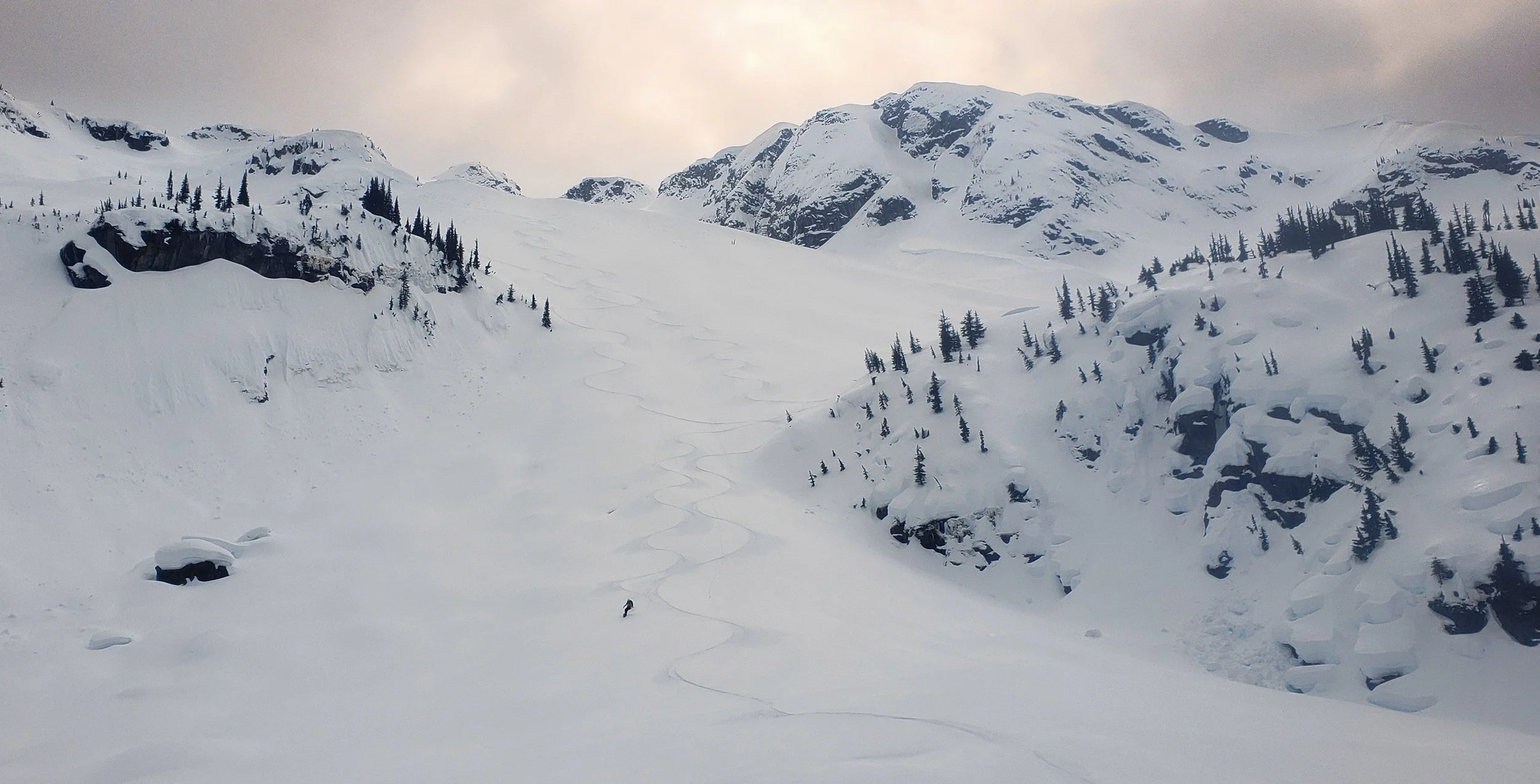
At VIBE, MAT is taught by Avalanche canada-certified guides who:
Travel in Island terrain every week
Understand how our coastal snowpack evolves
Know where the good learning terrain is, and when to use it
We keep groups small so you get real practice.
And we tailor the course to your experience level, AST 1 or AST 2 backgrounds both fit.
Final Thoughts
Why MAT Might Be the Best Next Step
AST 1 gives you awareness.
AST 2 develops deeper analysis.
MAT turns knowledge into confident, practical movement in terrain.
This is the course that helps you:
Start choosing lines with clarity
Become a confident backcountry partner and leader
If you want to feel the difference in your touring, MAT is the course that gets you there.
Join us this season:
Managing Avalanche Terrain (MAT) Course